Eyebrow Laser Tattoo Removal

Here is what you need to know about removing an unwanted eyebrow tattoo.

How to remove permanent eyebrow tattoos (microblading, semi-permanent makeup, cosmetic tattoo)?

 The most effective ways to remove facial tattoos are laser and non-laser tattoo removal methods.

 Laser tattoo removal works by breaking pigment particles into much smaller fragments, which the body then removes naturally through the lymphatic system. With each session, the tattoo gradually fades and becomes lighter.

 Non-laser tattoo removal involves using a tattoo machine and needle to introduce a saline, acid, or glycolic solution into the skin. This process helps lift the pigment from the dermis into the upper layers of the skin (epidermis), where it is removed through natural exfoliation during healing.

 The choice between laser or non-laser removal depends mainly on the colour of the tattoo. Laser cannot effectively target yellow, green, beige, or white pigments. If the tattoo was applied very traumatically, if there is scar tissue, or if the pigment density is very high, non-laser removal can help speed up the fading process.

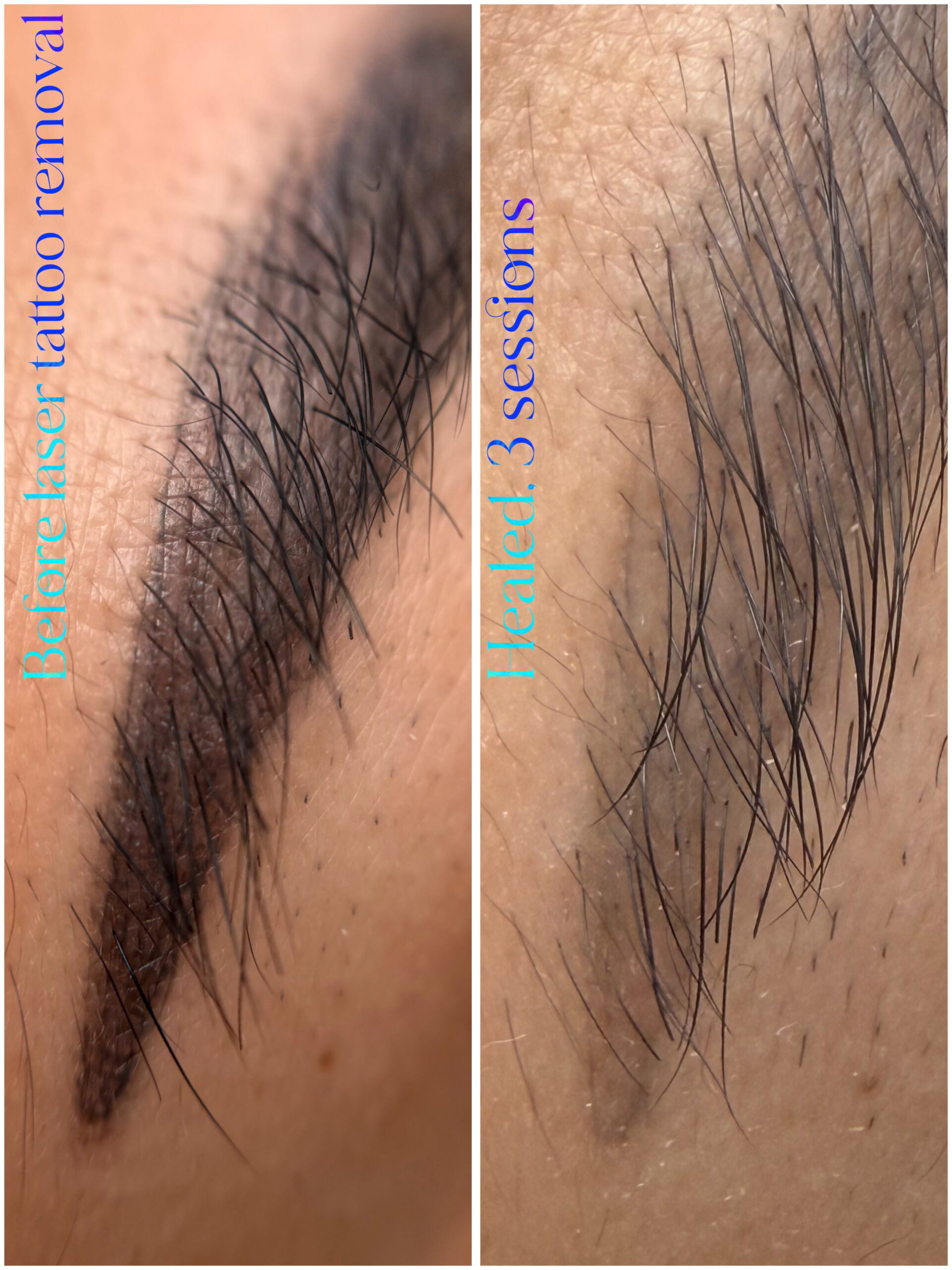
 Both laser and non-laser tattoo removal techniques do not affect hair follicles, so there is no risk to hair growth. The treatment focuses only on removing or lightening the pigment in the skin.

However, laser can affect the colour of the brow hairs. To protect them, it is recommended to tint your brows with a regular brow/lash tint a few days before the laser treatment.

Brows can be tinted again after the laser session — there are no wounds or cuts, and makeup can be applied immediately after the treatment.

How does laser eyebrow tattoo removal work?

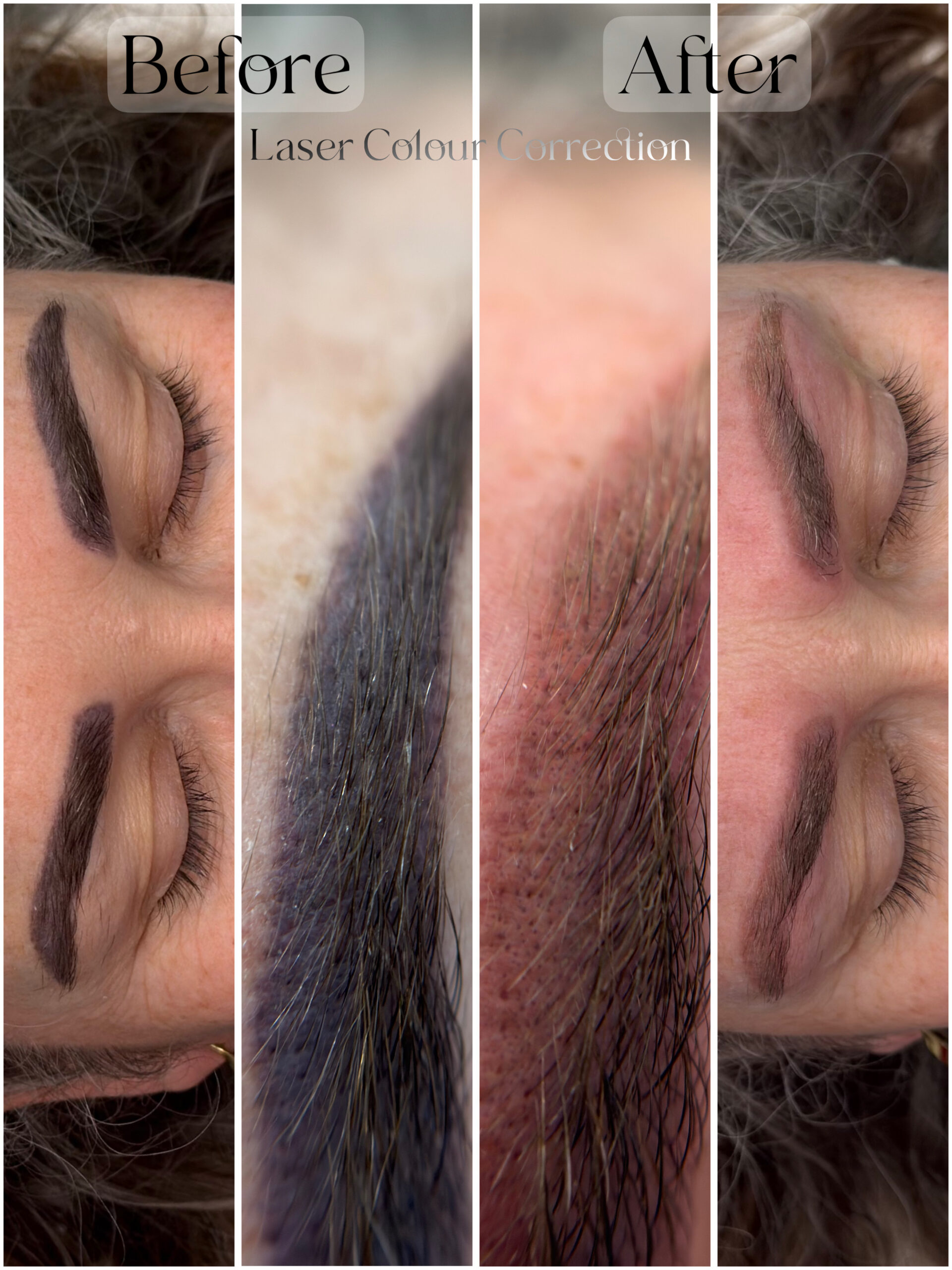
Using laser technology, we can lighten or remove an existing eyebrow tattoo, or correct unwanted colour tones — for example, turning blue into warm brown, or red into a soft grey-brown.

There are two laser wavelengths used for brow tattoos:

  • 1064 nm targets blue, purple, and grey pigments

  • 532 nm targets red, orange, and warm tones

During the treatment, laser energy disrupts the pigment’s structure, breaking the ink particles into tiny fragments that the body then naturally clears through the lymphatic system. Each session gradually fades and lightens the tattooed area.

Laser Colour Correction

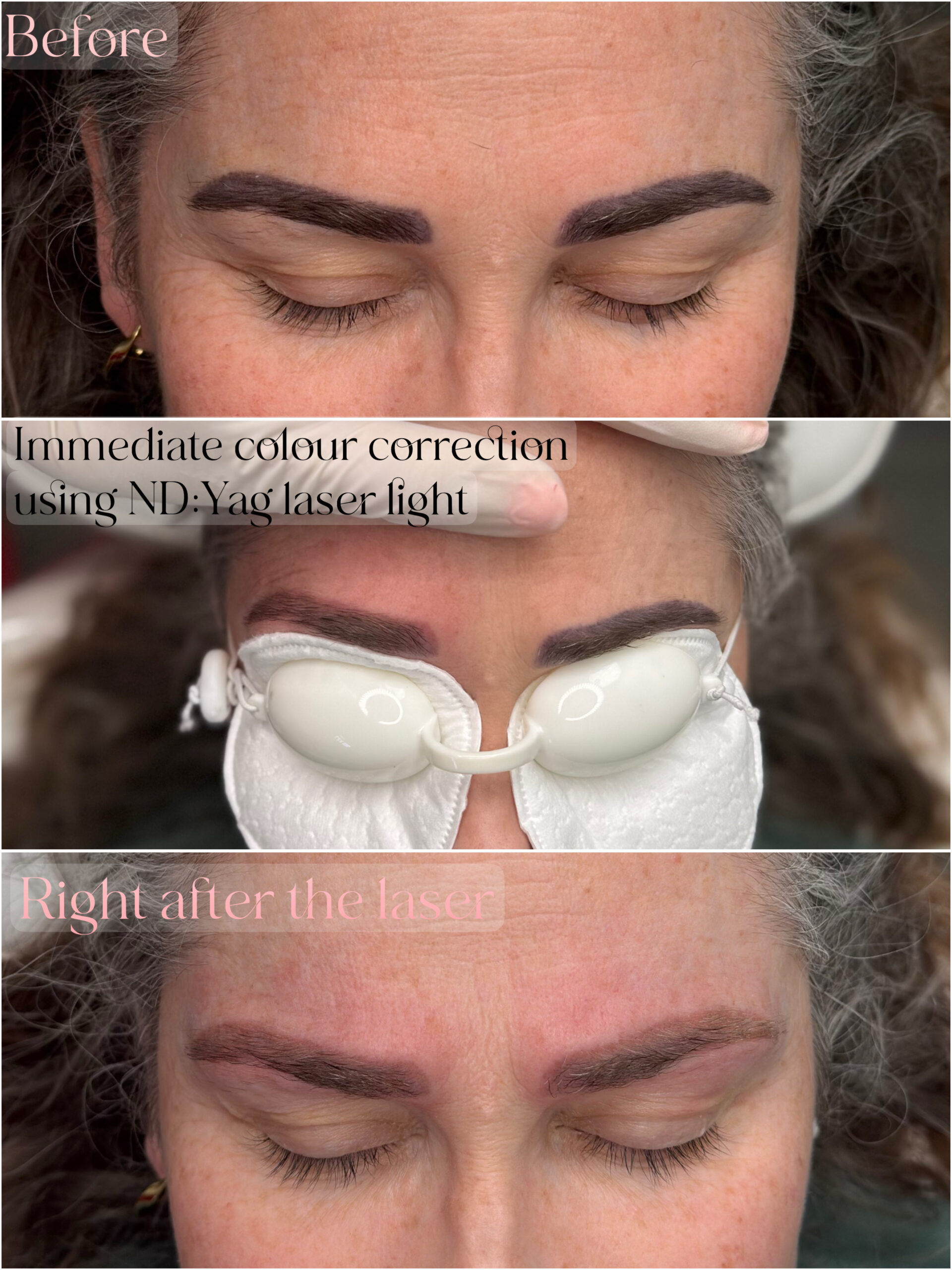
Believe it or not — we can correct an old brow tattoo in as little as 5 minutes.

If colour is the main concern, laser correction can:

  • lighten the existing pigment

  • convert blue / grey brows into a warm brown

  • neutralise red / orange brows into a soft grey-brown

🧬 The final result depends entirely on the chemical composition of the pigment currently in your skin.

If you’ve been thinking about correcting your old brow tattoo for a while — it might be the right time now.

How much does laser eyebrow tattoo removal cost? 

$150 per laser session, with the price potentially increasing depending on the size of the treated area.

The number of sessions required depends on the result you wish to achieve — full removal, partial removal, or colour correction:

Full removal: typically 6–8 sessions

Partial removal: usually 1–3 sessions

Colour correction: 1–2 sessions

FAQ

Can cosmetic tattoo done by another artist be touched up?

Yes, in many cases it can, but it depends on the colour, saturation, shape, placement, skin condition, and whether there is enough room for a better design.

When should old permanent makeup be removed instead of covered?

Removal is usually recommended first when the old pigment is too dark, too saturated, has healed to unwanted tones, or when the existing shape or placement prevents a more flattering correction.

Can old microblading be corrected?

Sometimes yes, but many old microblading cases need lightening or removal first, especially if the strokes have blurred, changed colour, or left the skin uneven. This ties directly into your published microblading article.

Can bad eyeliner or lip blush be corrected?

In many cases, yes, but the best approach depends on the healed colour, placement, saturation, and the condition of the skin. For example, if a lip outline has been tattooed above the natural lip border, it cannot simply be corrected by adding more pigment. In this situation, Dasha would usually recommend non-laser tattoo removal first to lighten and remove the misplaced pigment before creating a more natural and flattering result.

How many laser sessions are needed before a correction?

This depends on the pigment colour, depth, saturation, how many times the area has been tattooed, and how the skin responds to laser treatment. In some cases, only partial lightening is needed before a correction. For example, laser treatment may help shift unwanted blue-grey pigment toward a softer brown or warm orange tone, or help reduce overly bright red or orange tones so the area becomes easier to correct safely. More heavily saturated tattoos, especially those that have been tattooed multiple times and contain several layers of pigment, usually need more than one removal session before new work can be done. In more complex cases, the process can take up to 10 sessions. The gap between treatments is usually around 6 to 10 weeks, depending on the skin and the healing response.

How many laser sessions are needed before a correction?

This depends on the pigment colour, depth, saturation, how many times the area has been tattooed, and how the skin responds to laser treatment. In some cases, only partial lightening is needed before a correction. For example, laser treatment may help shift unwanted blue-grey pigment toward a softer brown or warm orange tone, or help reduce overly bright red or orange tones so the area becomes easier to correct safely. More heavily saturated tattoos, especially those that have been tattooed multiple times and contain several layers of pigment, usually need more than one removal session before new work can be done. In more complex cases, the process can take up to 10 sessions. The gap between treatments is usually around 6 to 10 weeks, depending on the skin and the healing response.

Can Dasha remove old permanent makeup before creating a new result?

Yes. Dasha specialises in cosmetic tattoo removal and has extensive experience treating old permanent makeup, including brows, lips, eyeliner, and other correction cases. This allows her to approach removal in a way that protects the skin, minimises the risk of scarring, and, in some cases, helps soften or shift the unwanted healed colour before corrective work is performed. The way a tattoo changes during laser removal depends on the pigment that is currently present in the skin. Some pigments may lighten directly, while others may shift in tone first. Because of this, the first laser session often serves as both a treatment and an important assessment of pigment response. Based on what happens in that first session, Dasha can then recommend whether further removal, colour correction, or a staged correction approach will give the safest and most beautiful final result.