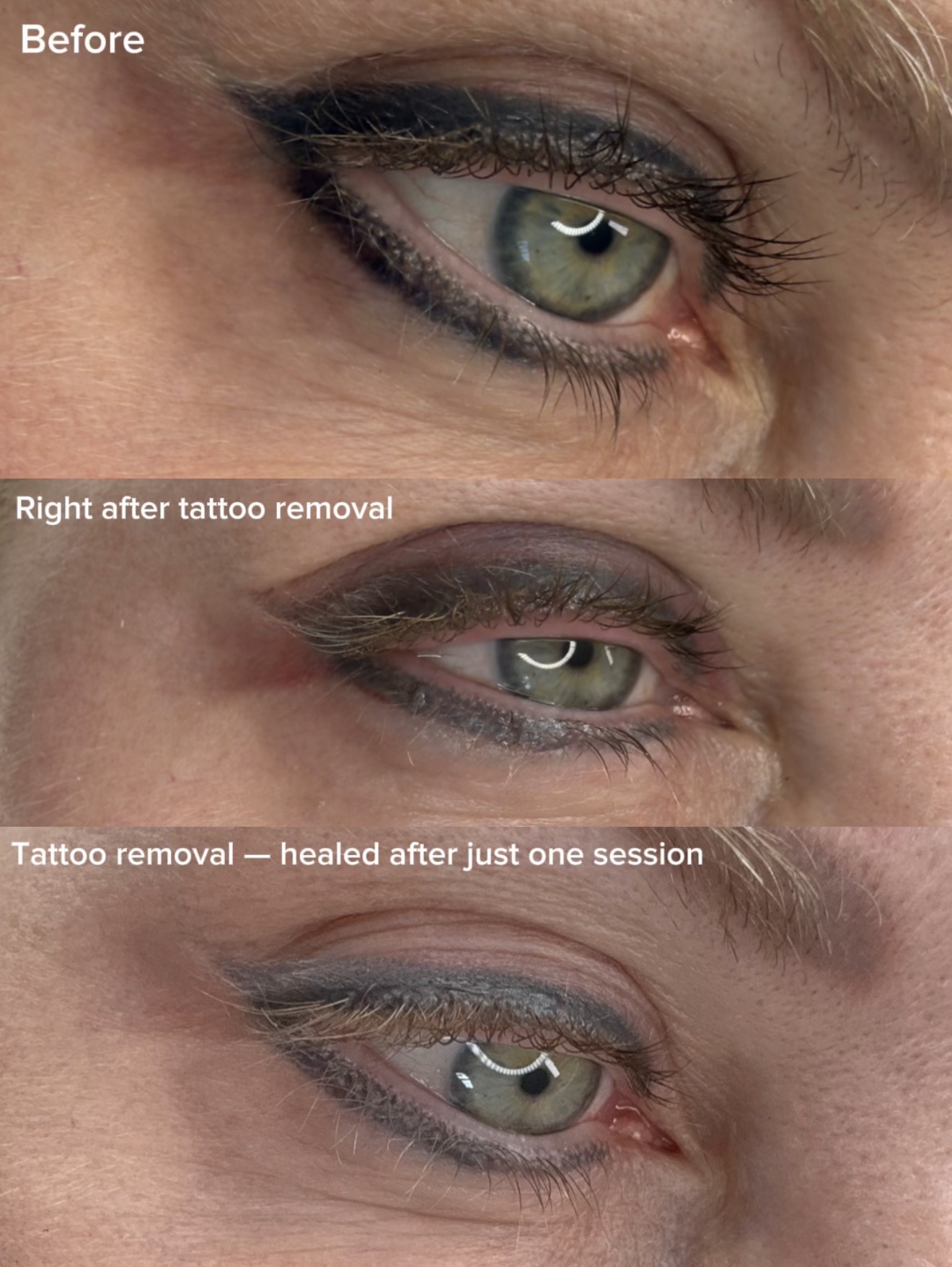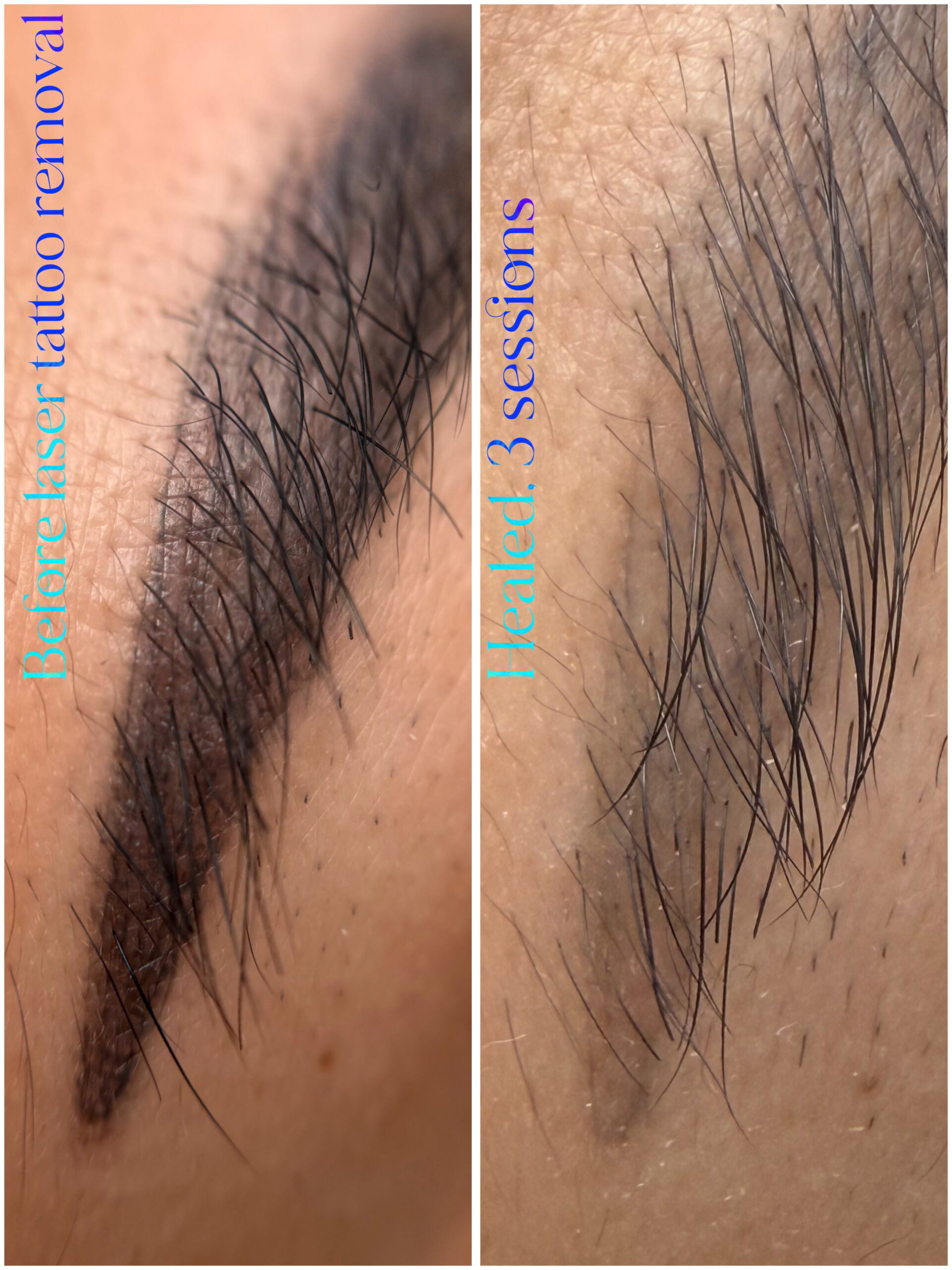
How Many Treatments Do I Need For Laser Tattoo Removal?
How many sessions are needed to remove a tattoo?
The Kirby–Desai Scale — explained simply
To estimate how many laser sessions may be needed for tattoo removal, specialists worldwide use the Kirby–Desai Scale.
It is based on medical research and is around 80% accurate.
In simple terms:
we look at a few key factors of your tattoo, add up points, and this gives an estimated number of treatments.

1. Skin type (the most important factor)
Your skin tone plays a major role in how easily pigment can be removed.
-
Lighter skin tones usually need fewer treatments
-
Darker skin tones must be treated more conservatively for safety, which means more sessions may be required
The lighter the skin, the easier the removal.
2. Location of Tattoo on Your Body
Tattoo removal depends on blood circulation and the lymphatic system.
-
Areas that respond best:
face, head, neck, chest, shoulders -
Areas that respond slower:
hands, fingers, feet, ankles
Tattoos closer to the heart and lymph nodes fade faster.
3. Ink Color(s)
Ink colour is one of the key factors.
-
Black and dark colours respond best to laser
-
Red is usually removable or correctable
-
Multicolour tattoos need more sessions
-
White, yellow, green, beige cannot be seen by the laser
→ these colours are removed using non-laser methods (Saline, Acid, etc)
4. Amount of Ink Density: Pro vs Amateur
(Professional vs amateur tattoos)
-
Professional tattoos
→ deeper and more saturated pigment
→ usually need more sessions -
Amateur / home tattoos
→ shallower pigment
→ fade faster
The denser the pigment, the longer the removal process.
5. Scarring and Tissue Change
If the tattoo or microblading was applied aggressively, there may be:
-
scar tissue
-
skin texture changes
These cases usually require more treatments.
6. Layering and Cover-Ups
If your tattoo:
-
was done over another tattoo
-
has multiple layers of pigment
-
is a heavy cover-up or blackout
There is significantly more ink in the skin, which means more sessions are needed.
What to keep in mind
-
The Kirby–Desai Scale gives an estimate, not an exact number
-
The final treatment plan is confirmed during consultation
-
We always choose the safest and most effective method for your skin and tattoo