Scalp Micropigmentation in Christchurch: Cost, Process, Results & FAQ

Scalp Micropigmentation Christchurch | Cost, Results & FAQ

Scalp Micropigmentation, also known as SMP or scalp tattooing, is a specialised cosmetic and medical tattoo treatment designed to create the appearance of tiny hair follicles on the scalp.

At Dasha Cosmetic & Medical Tattoo in Christchurch, SMP is used to visually soften hair thinning, restore the appearance of density, create a natural-looking hairline, and camouflage FUE or FUT hair transplant scars.

This guide explains how scalp micropigmentation works, how many sessions are usually needed, what it costs, how long results last, and what to expect before and after treatment.

What is Scalp Micropigmentation?

Scalp Micropigmentation is a specialised tattoo technique where tiny pigment impressions are placed into the scalp to replicate the appearance of natural hair follicles.

The treatment can help create the look of a fuller scalp, soften visible thinning, restore the appearance of a hairline, or blend hair transplant scars with the surrounding scalp.

SMP does not grow new hair. Instead, it creates a visual illusion of density and can make hair loss, thinning areas or scalp scarring appear less noticeable.

The Treatment Process

Scalp Micropigmentation typically involves 3 sessions. Each session usually takes around 1,5 to 3 hours, depending on the size of the area, degree of hair loss, density required, and whether scar camouflage is involved.

Sessions are usually spaced around 10 to 14 days apart. This allows the scalp to heal and gives the pigment time to settle before the next layer of density is added.

The treatment is built gradually. This helps create a soft, natural-looking result rather than an overly dark or artificial appearance.

During the treatment, Dasha uses professional SMP pigments, precise needle configurations and careful placement to replicate the appearance of tiny hair follicles and blend them with your natural hair pattern.

After each session, mild redness is normal and usually settles within a few hours to 24 hours, depending on skin sensitivity.

How Many SMP Sessions Will I Need?

Scalp Micropigmentation is completed over 3 treatment sessions.

One session is not enough — even for a small area. SMP is not a single-layer treatment. The result is built gradually by placing pigment in controlled layers, allowing the scalp to heal between sessions and giving the colour time to settle before more density is added.

The first session creates the foundation. The second session builds colour, density and coverage. The third session refines the result, adjusts the tone if needed, and helps create a more even, natural-looking and long-lasting finish.

This layered approach is what allows SMP to look soft and realistic rather than too dark, flat or artificial. It also supports better pigment retention and a more stable healed result.

After the 3-session course is completed, Dasha invites every client back for a complimentary follow-up review. This is usually scheduled around 5 to 6 months after the final session, once the pigment has fully settled and the healed result can be properly assessed.

This follow-up is included as part of Dasha’s quality standard. It allows the healed result to be reviewed in real skin over time, not just immediately after treatment. If the skin has not retained enough pigment in some areas, small refinements can be made to improve density, balance and overall softness.

This 4th appointment is not a replacement for the 3-session process — it is a complimentary quality review and refinement session designed to support the most natural, stable and well-blended SMP result.

Scalp Micropigmentation Cost

The cost of Scalp Micropigmentation depends on the size of the area, the degree of hair loss, the amount of density required, and whether scar camouflage is involved.

Scalp Micropigmentation is completed over 3 treatment sessions. This is the standard process for achieving a natural-looking, stable and well-blended result. One session is not enough, even for a small area, because SMP is built gradually through controlled layers of pigment.

As a guide, SMP treatments may range from approximately $700 to $1,500 per session, depending on the treatment area and complexity.

Hair transplant scar camouflage, including FUE or FUT scars, may range from approximately $400 to $1,000 per session, depending on scar size, visibility, texture and complexity.

After the 3-session course is completed, Dasha invites every client back for a complimentary follow-up review, usually around 5 to 6 months after the final session. This 4th appointment is included as part of Dasha’s quality standard and allows the healed result to be assessed once the pigment has fully settled.

Funding Support for Eligible Clients

Health NZ funding may be available for Scalp Micropigmentation when there are eligible medical indications, such as hair loss caused by cancer treatment, alopecia, autoimmune conditions, or other qualifying medical reasons.

Dasha is an approved provider for selected restorative cosmetic and medical tattoo services. Funding may be used for eligible treatments, including Scalp Micropigmentation, brow and eyeliner tattooing, areola restoration, and custom nipple and areola prosthetics.

To access funding, clients usually need a current medical certificate from their GP, specialist, or treating doctor confirming the medical reason for hair loss.

The subsidy may cover the procedure fully or partially. This depends on the total cost of the treatment, which is based on the size of the area, the amount of work required, the number of sessions, and the complexity of the procedure.

In some cases, the subsidy may cover 100% of the treatment cost. In other cases, it may cover part of the cost, and the remaining balance will be paid by the client.

More information can be discussed during your consultation.

Contact us

Payment Options

Payment plans may be available by arrangement. A deposit is required to secure your appointment, and the remaining balance must be paid before or on the day of treatment, according to the agreed payment schedule.

All treatments must be paid in full before or on the day of the appointment. Treatment is not performed on a “pay later” basis.

For insurance-funded or Health NZ subsidised treatments, the client pays for the procedure on the day of treatment, or before the appointment if required. An invoice or receipt will then be provided so the client can submit the claim and receive reimbursement directly back into their own bank account from their insurance company or Health NZ.

Reimbursement is handled directly between the client and the relevant funding provider. The treatment cost must still be paid to the clinic before or at the time of the appointment.

Afterpay may be available as a payment option for eligible clients, subject to Afterpay approval, limits and terms. If you would like to use Afterpay, please mention this before your appointment so payment options can be confirmed in advance.

Payment details are provided after booking confirmation or invoice issue.

FAQ: Scalp Micropigmentation

How Long Do SMP Results Last?

Scalp Micropigmentation is a long-lasting semi-permanent treatment. Results typically last around 1 to 4 years, depending on skin type, pigment retention, sun exposure, lifestyle, immune response and aftercare. Over time, the pigment gradually softens and fades. A maintenance session may be recommended every few years to refresh the density and keep the result looking natural.

Do I Need Time Off Work?

Scalp Micropigmentation usually requires minimal downtime. Most clients can return to work the same day or the next day. Mild redness on the scalp is common after treatment and usually settles within a few hours to 24 hours, depending on skin sensitivity. A hat or headwear may be worn if needed, as long as it is clean and does not rub or irritate the treated area.

How Do I Choose a Hairline?

A natural hairline is one of the most important parts of scalp micropigmentation. The best hairline is designed around your facial structure, age, natural hair growth pattern, existing hair, head shape and long-term style goals. Dasha usually recommends a conservative, soft and age-appropriate hairline rather than an overly sharp or artificial design. The hairline can be refined gradually over the treatment sessions to create a balanced and natural-looking result.

Will SMP Change Colour Like Old Tattoos?

Scalp Micropigmentation should not heal like a traditional black tattoo when it is performed correctly. A blue result usually happens when pigment is implanted too deeply into the skin, or when too much pigment has been repeatedly placed into the area. The scalp skin is very thin, and when pigment is placed too deep or becomes too concentrated, it can start to look like a regular blue tattoo rather than soft hair follicles. The healed colour of SMP should resemble the colour of a natural hair follicle. When hair is shaved very short, the visible follicle usually appears within a soft grey spectrum — from grey-brown to grey-black. High-quality SMP is performed very superficially and gradually. The pigment shade, dilution, needle choice, depth and density selected carefully for each client’s skin. Every scalp is different. Dry and oily skin heal differently. Thin scalp skin and thicker scalp skin also hold pigment differently. The amount of pigment that can safely and naturally be placed into the skin depends on skin type, skin thickness, oiliness and how the skin responds during the procedure. When SMP is placed at the correct superficial depth, the pigment should heal soft and natural. Over time, it gradually becomes lighter as the skin renews and the pigment slowly fades, rather than shifting dramatically into a blue or artificial-looking colour.

Very Oily Scalp Skin and SMP

Very oily scalp skin needs to be assessed carefully before Scalp Micropigmentation. If the scalp is extremely oily, shiny, inflamed, or has frequent pimples, papules, blocked follicles, or active breakouts, the skin may need to be prepared before treatment. SMP should not be performed over active inflammation, infection, irritated follicles, or acne-like breakouts on the scalp. The first step is to improve the overall condition of the skin before the procedure. Hydration is very important, as excessive oiliness can sometimes be a sign that the body and skin are not adequately hydrated. Drinking enough water and supporting the skin barrier can help the scalp feel calmer and more balanced before treatment. For SMP, the scalp should be in a stable condition: clean, calm, and free from active pimples, irritation, or inflammation on the day of the appointment. It is also important to understand how very oily scalp skin heals. Oily skin often does not hold a crisp pigment “dot” in the same way as normal or drier skin types. Over time, the pigment impressions may soften and spread slightly within the skin. SMP can still work beautifully for creating the illusion of hair growth and reducing the contrast of bald or thinning areas, but the healed effect may look more like a soft shadow of density rather than perfectly defined individual dots. For this skin type, pigment selection, dilution, depth, density, and spacing must be adjusted carefully. The goal is to allow the pigment to heal softly and fade gradually over time without becoming too heavy, blurry, or blue-toned.

Can I Keep My Hair Long With SMP?

This depends on the pattern of hair loss and the contrast between your existing hair and the exposed scalp. SMP can work very well with longer hair when the thinning is diffuse and even — for example, when the hair is gradually reducing in density across the scalp, but there are still natural hairs throughout the area. In these cases, scalp micropigmentation can help reduce scalp visibility between existing hairs and create the appearance of fuller density. However, if there are clearly bald areas with strong contrast — for example, thick hair in one part of the scalp and a hairless patch in another, or a deep receding hairline with very dense surrounding hair — the hairstyle usually needs to be much shorter for SMP to look natural. Pigment cannot replace the physical volume of hair. If long or dense hair sits next to a bald area, simply adding pigment to the scalp can look like colouring in the skin rather than creating a realistic follicle effect. For areas with obvious baldness, the most natural SMP result is usually achieved when the hair is shaved very short. This allows the natural shaved follicles and the implanted SMP follicles to visually blend together as one seamless result. During your consultation, Dasha will assess your hair density, hairline, scalp visibility, hair length and styling goals to recommend the most natural approach for your situation.

Best Haircut for Thinning Crown After Hair Transplant and SMP

For clients who have had a hair transplant in the hairline and crown area, Scalp Micropigmentation can be very helpful when the transplanted hair provides some coverage, but the scalp still appears visible through the crown. In this situation, SMP can reduce the contrast between the lighter scalp and the surrounding hair, creating the appearance of more density in the thinning crown area. However, the haircut plays a very important role in how natural the final result looks. If the hair on the sides is very dense, dark and long, while the crown is thinner, the contrast between the thick side hair and the lighter crown can still be noticeable. SMP can darken the visual appearance of the scalp, but it cannot create the same physical volume as real hair. For the most natural result, the haircut should help balance the density. In many cases, this means keeping the sides shorter and gradually blending the length toward the crown, where the hair is thinner and SMP is used to create the illusion of density. A softer, blended haircut can make the transition between natural hair, transplanted hair and SMP look much more seamless. The goal is not only to add pigment, but to create a balanced overall appearance where the hair density, scalp tone and haircut work together. During consultation, Dasha can assess the crown area, transplanted hair density, side hair density, hair colour, scalp visibility and usual haircut to recommend whether SMP will work best with your current style or whether a shorter, more blended haircut would create a better result. SMP works best when the haircut supports the illusion. Pigment can reduce scalp contrast, but the haircut helps control the visual balance of density.

Will Scalp Micropigmentation Work With Grey Hair?

Yes. Scalp Micropigmentation can work well with grey or lighter hair when the correct pigment dilution and density are used. When hair is cut very short, grey hair often appears darker at the root. SMP pigment can be adjusted in shade and softness to blend with the natural appearance of closely cropped hair. For the most natural result, clients with grey or light hair are usually advised to keep the hair short, so the pigment impressions blend with the visible hair roots rather than longer grey strands.

Can SMP Camouflage FUE or FUT Hair Transplant Scars?

Will SMP Look Good on Lighter or Darker Skin Tones?

Yes, SMP can be adapted to a wide range of skin tones and undertones. The pigment shade, dilution, density and placement are customised to suit your scalp, hair colour, skin tone and desired result. For darker or more reactive skin types, treatment is approached conservatively to reduce the risk of pigment appearing too heavy or unnatural. For lighter skin tones or grey hair, a softer dilution may be used to create a more natural blend.

Preparation and Aftercare

Can I Use Propecia or Rogaine After SMP?

If you use prescription hair loss medication such as Propecia, please continue to follow your doctor’s advice. Topical products such as minoxidil / Rogaine should not be applied to freshly treated skin during the healing period, as they may irritate the scalp and affect pigment retention. Please discuss your current hair loss products during consultation so Dasha can advise when it is appropriate to pause and restart topical products around your SMP sessions.

Does Scalp Micropigmentation Hurt?

Most clients describe Scalp Micropigmentation as very tolerable and much less uncomfortable than a traditional tattoo. In fact, many clients relax deeply during the appointment, and some even fall asleep while the treatment is being performed — unless the conversation is too interesting and they decide to stay awake. Only a small number of clients find the procedure uncomfortable. Sensitivity can vary depending on the area being treated, skin type, stress level, tiredness, and individual pain tolerance. During the treatment, you may feel a light scratching sensation or mild irritation on the scalp, but the procedure should not feel harsh or traumatic. After the session, the scalp may feel slightly warm, sensitive or tight for a short time, but this usually settles quickly.

Can I See Scalp Micropigmentation Before and After Photos?

What scalp micropigmentation treatments do you offer in Christchurch?

I offer scalp micropigmentation for both men and women, including treatments for alopecia, hormonal hair loss, hairline restoration, and scar camouflage after hair transplant surgery. This also includes working with clients after hair transplant procedures to camouflage FUT and FUE scars and add density where needed. My approach is centred on soft, natural-looking healed results that wear beautifully over time.

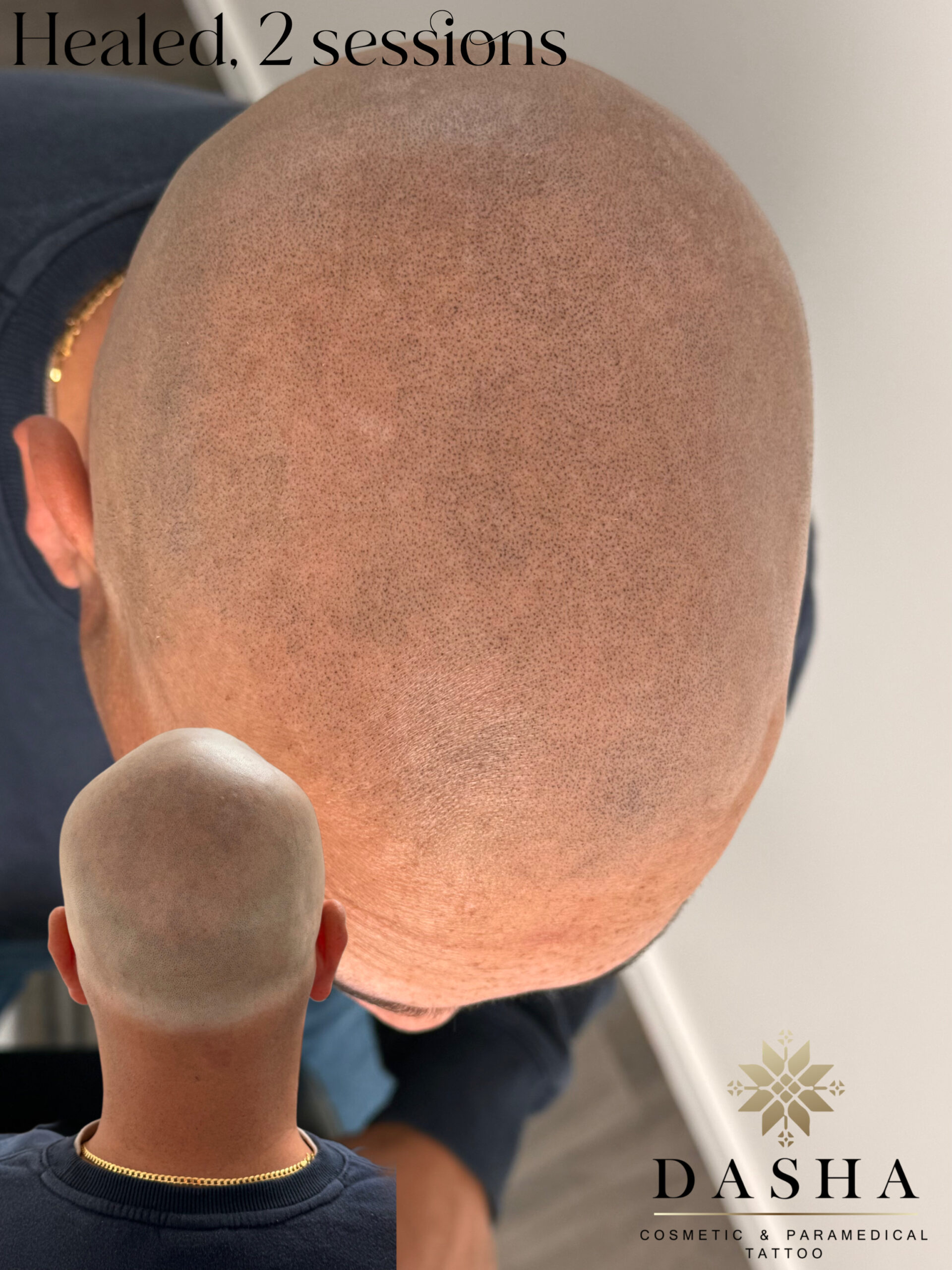
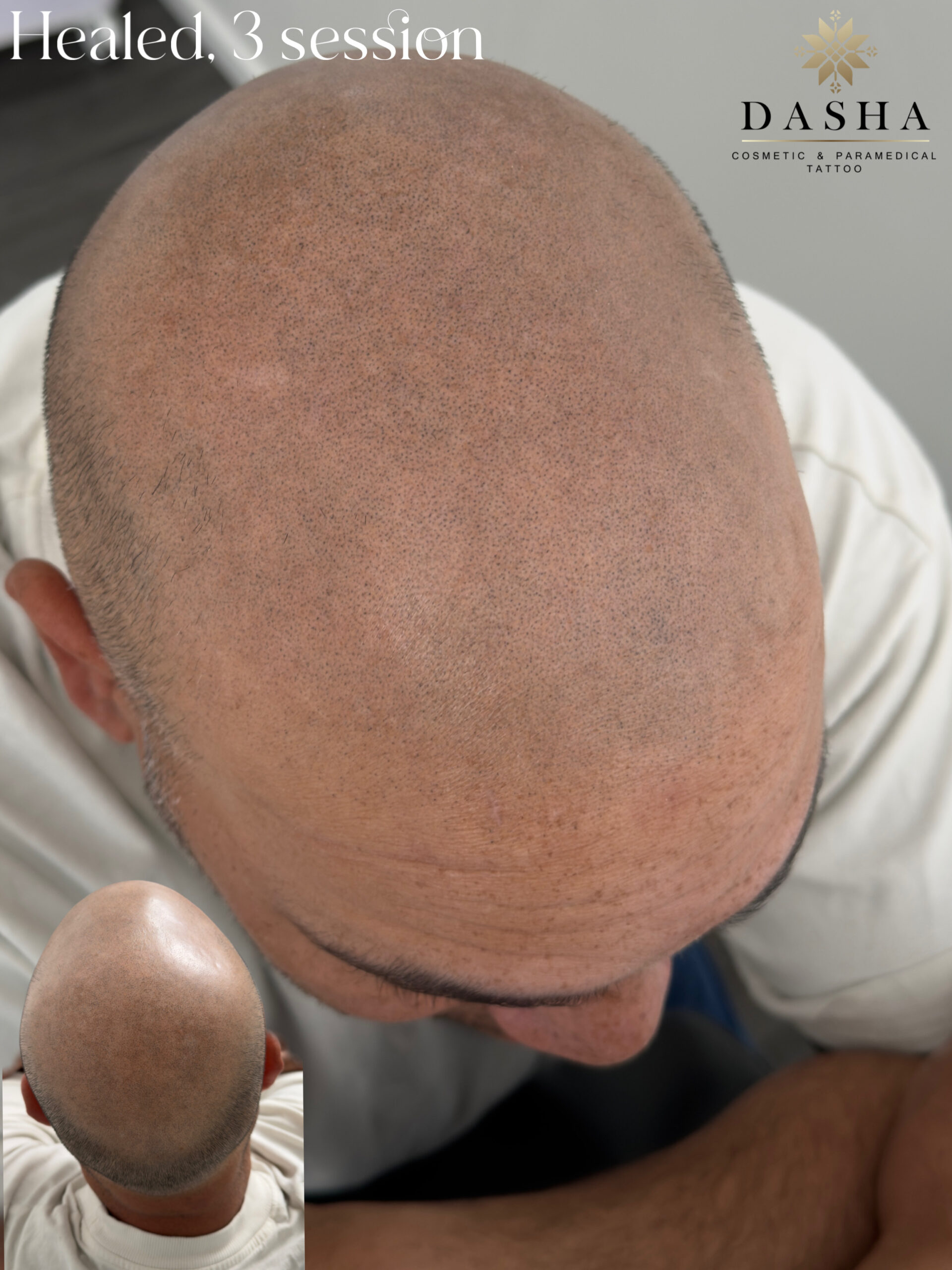
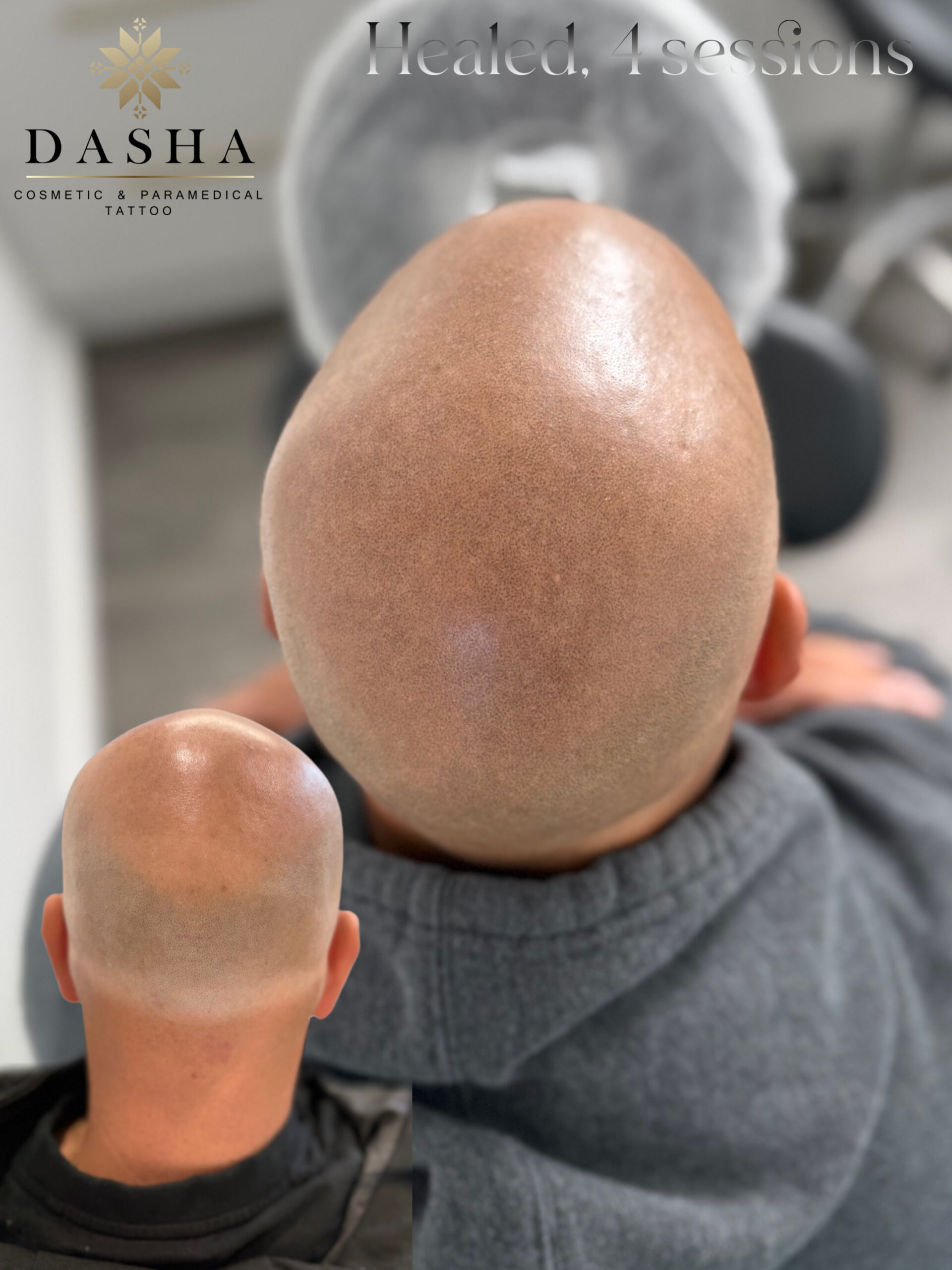
Healed SMP Results After Each Session

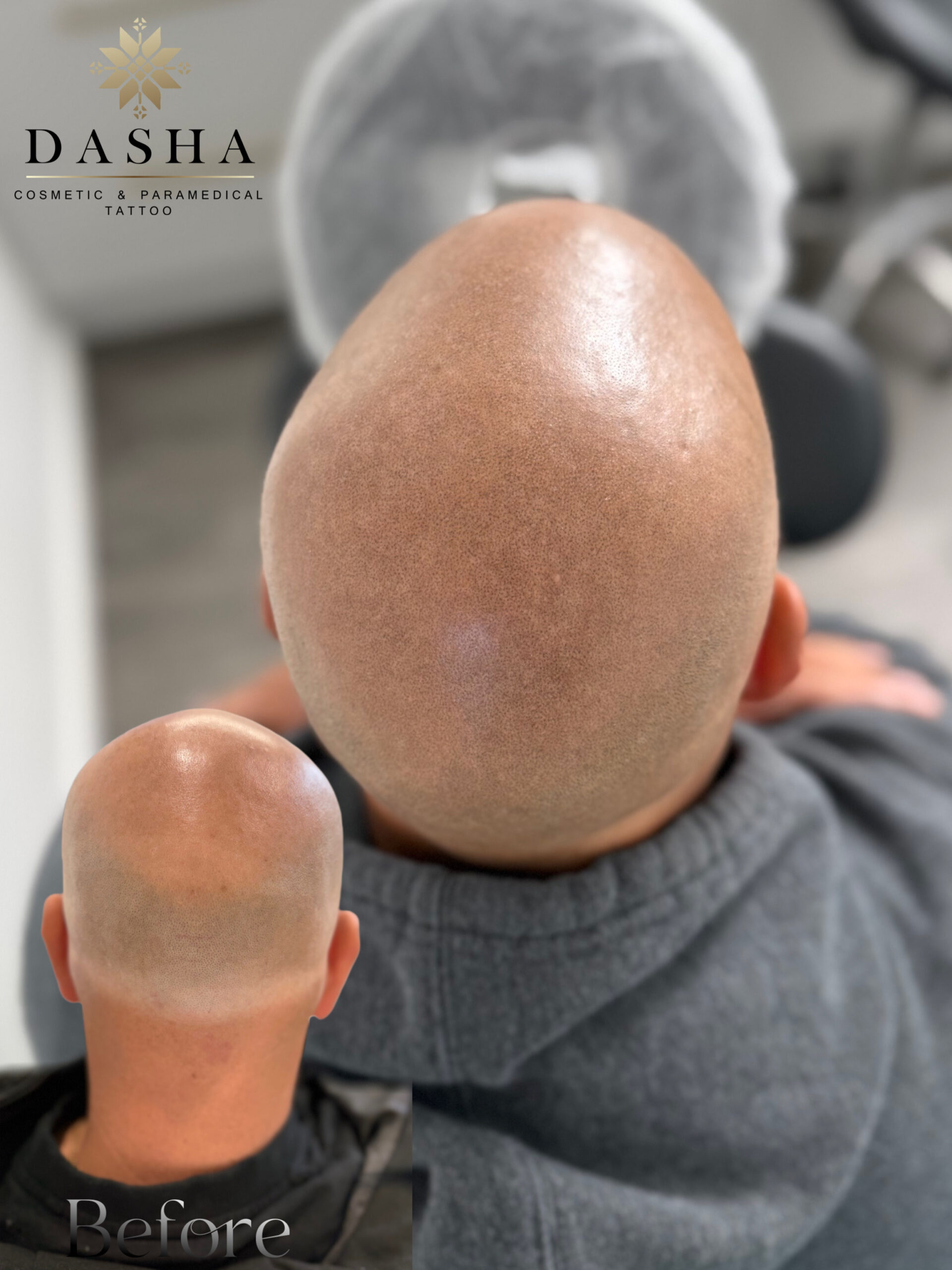
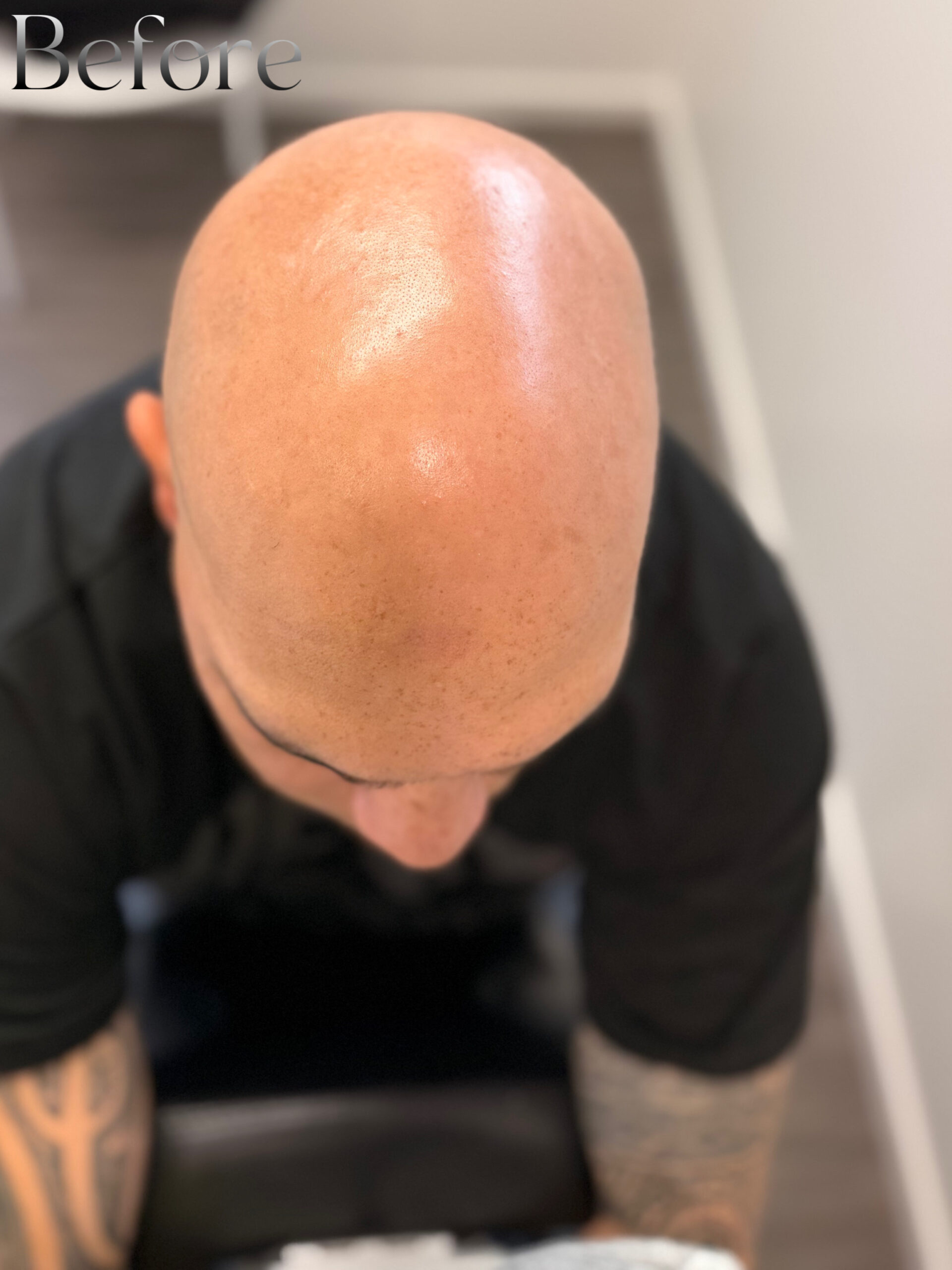
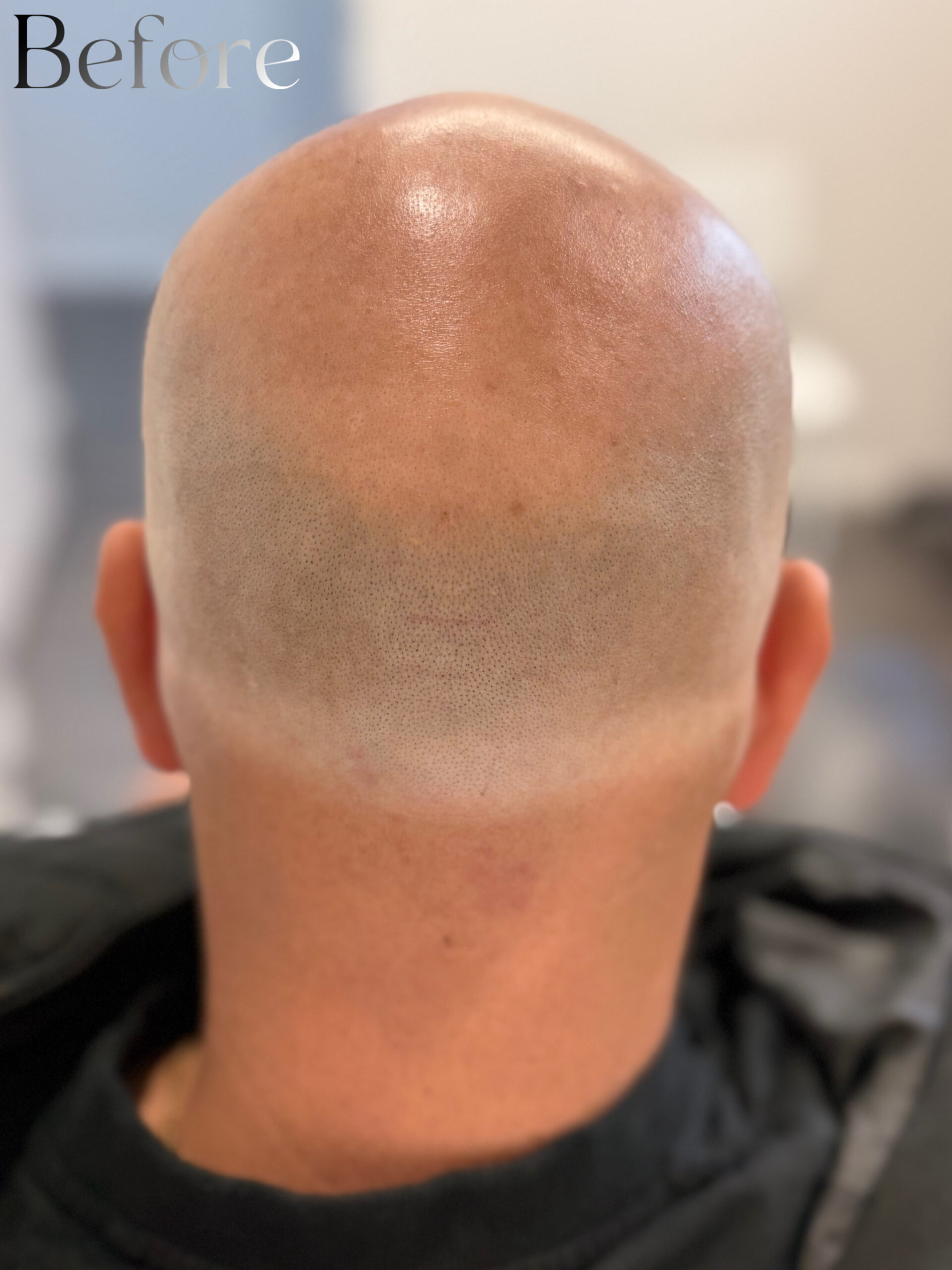
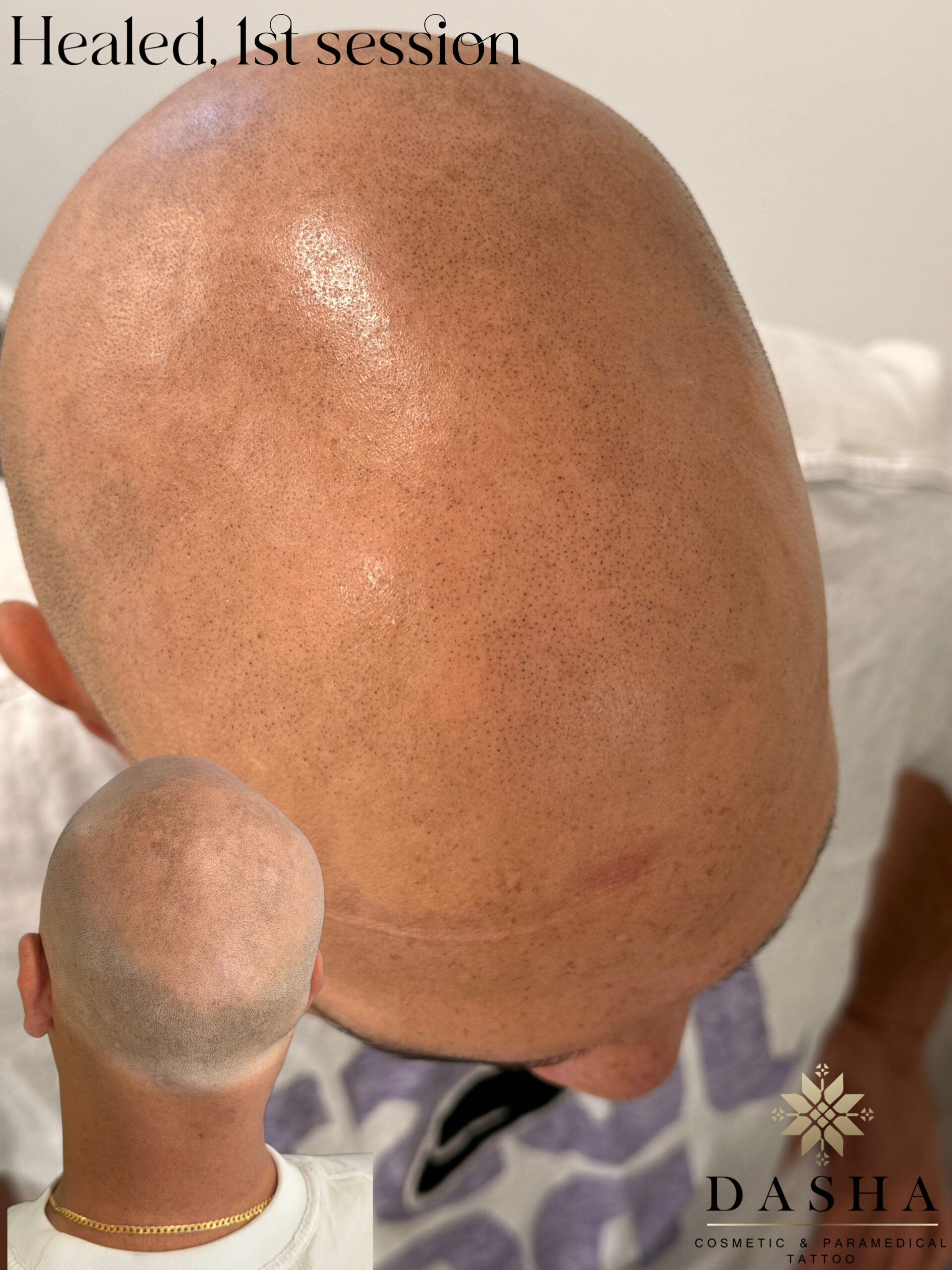
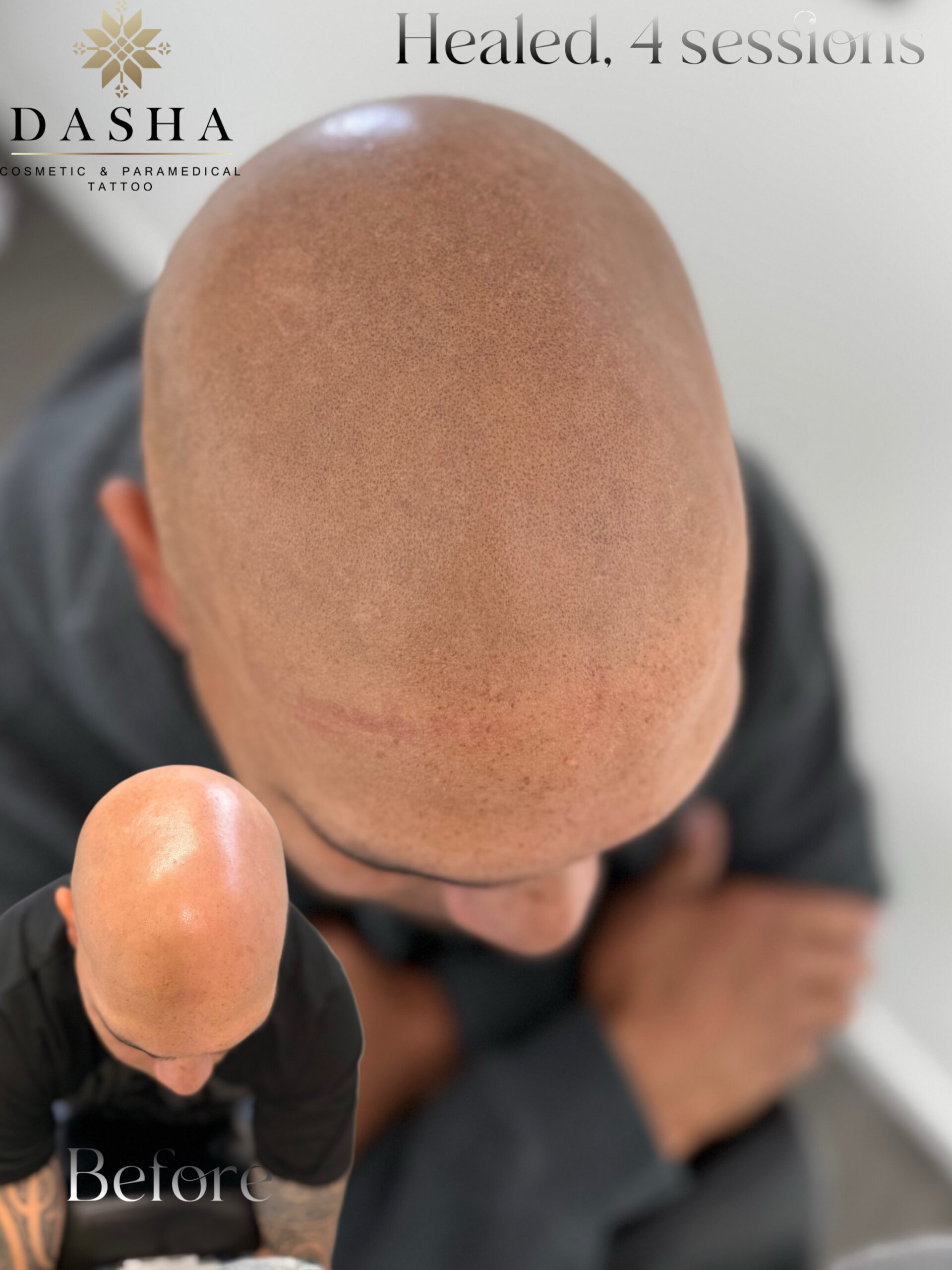
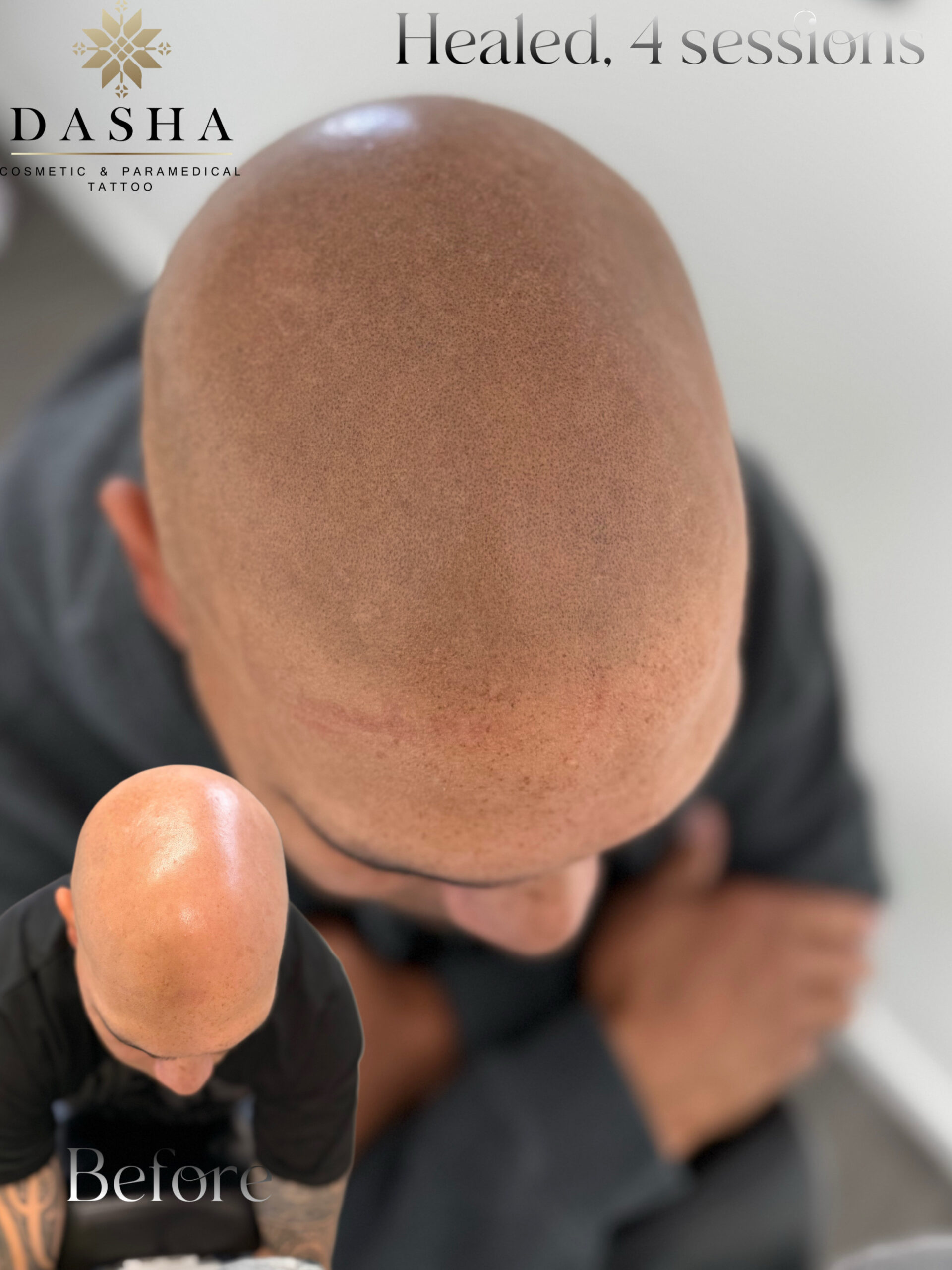
his photo series shows the step-by-step progress of Scalp Micropigmentation after each session — from the first soft layer of pigment to the final healed density.

SMP is built gradually over 3 sessions. Each session adds more depth, balance and softness, allowing the pigment to settle naturally in the skin before the next layer is added.

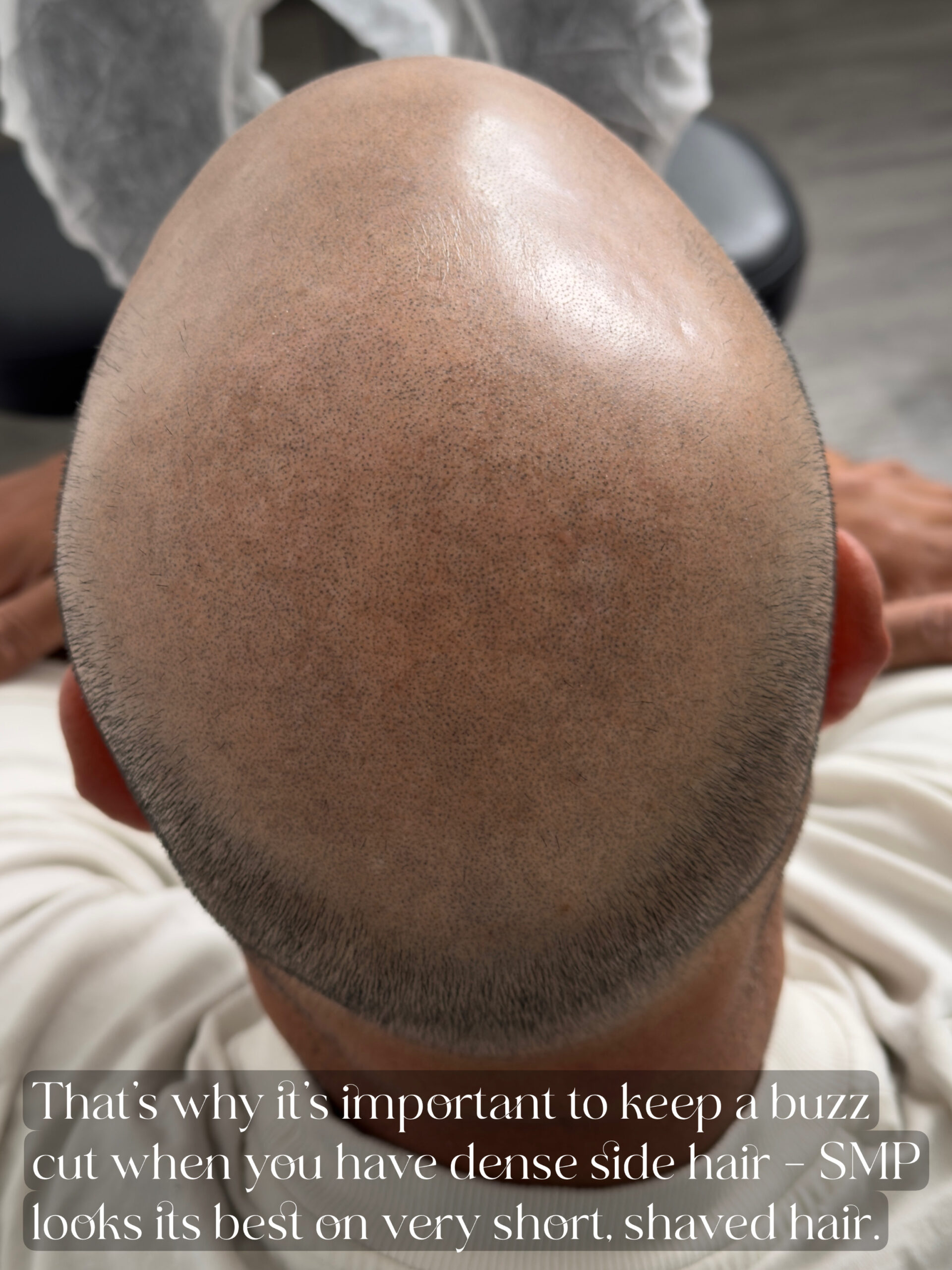
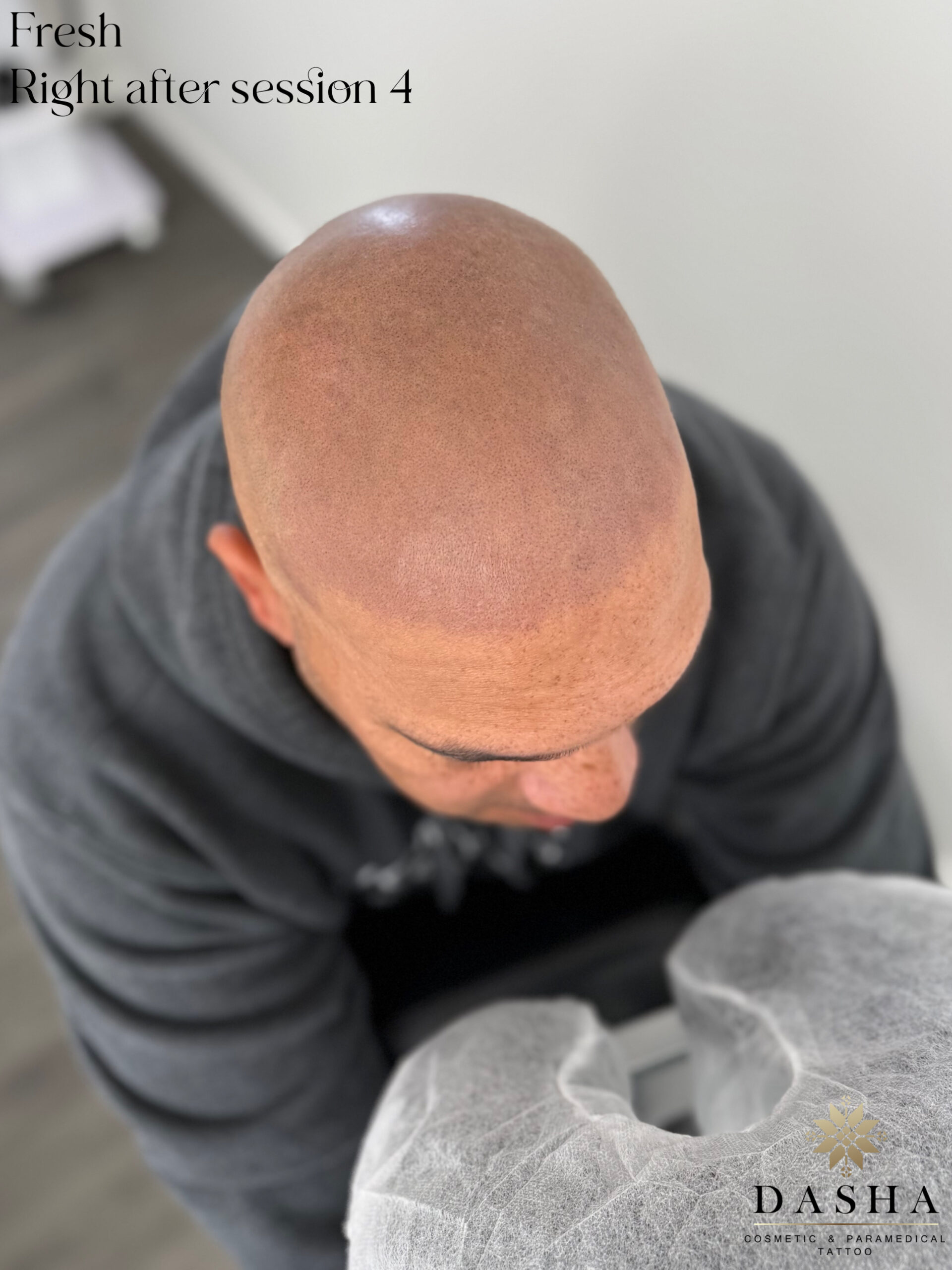
This example also clearly shows how important the right haircut is for Scalp Micropigmentation. In one of the photos, the client arrived without shaving the sides of the head before the appointment. The longer hair on the sides created stronger contrast against the treated area, and the SMP effect immediately looked less blended.

This is why SMP is not only about placing pigment into the scalp. The haircut must support the illusion.

SMP works best when the haircut supports the illusion. Pigment can reduce scalp contrast, but the haircut helps control the visual balance of density.

When the hair is kept at the correct length, the natural shaved follicles and the SMP impressions blend together much more seamlessly. If the surrounding hair is too long or too dense, the contrast between real hair and the treated scalp becomes more visible, even when the pigment itself is healing well.

The photos below are a clear example of how SMP develops through each session, and how the correct haircut helps maintain a natural, realistic result.