Touch-Up for Permanent Makeup Done by Another Artist: Correction or Removal?
Not every cosmetic tattoo done by another artist can be safely touched up. In some cases, previous permanent makeup can be corrected beautifully, while in others, removal is the better first step. The right approach depends on the colour, saturation, shape, placement, scar tissue, and the overall condition of the skin.
If you have had brows, eyeliner, lips, scalp micropigmentation, or another cosmetic tattoo done elsewhere and would like Dasha to improve it, she will first assess whether the old work can be corrected safely or whether removal is needed before any new pigment is added.
A poor cosmetic tattoo result is often not just a colour issue. In many cases, the problem begins with poor pigment choice, poor technique, lack of healed-result planning, or treatment performed by someone without enough permanent makeup experience. This is why some old cosmetic tattoo can be corrected successfully, while other cases require removal before a better result can be created.
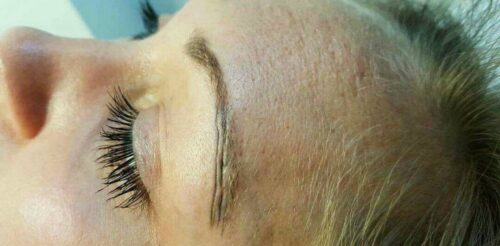
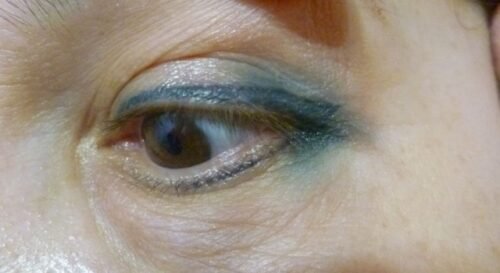
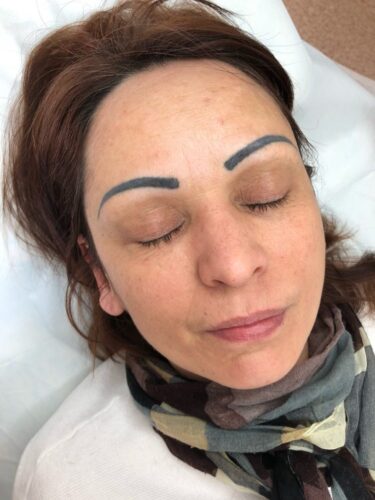
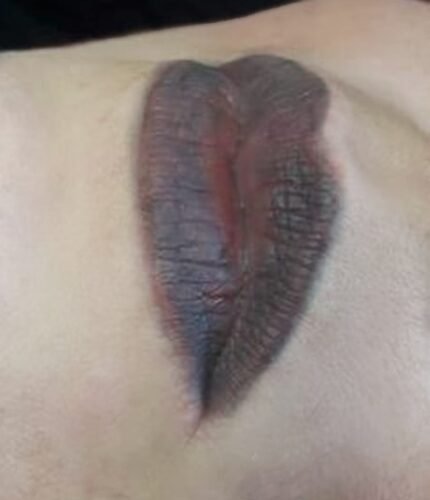
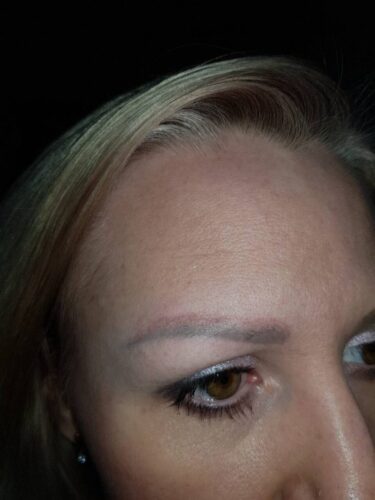
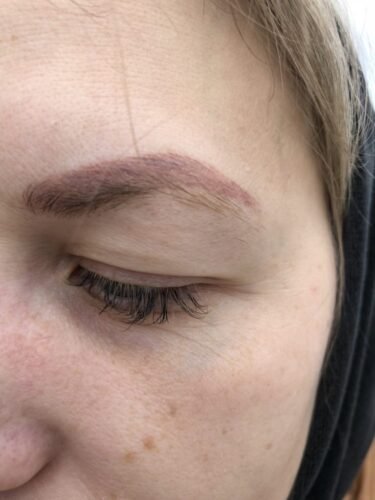
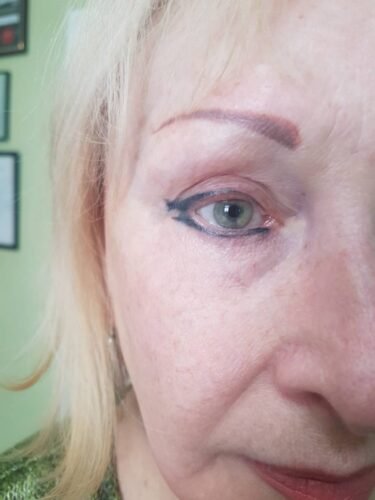
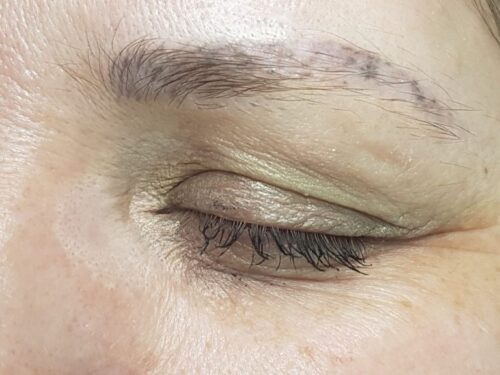
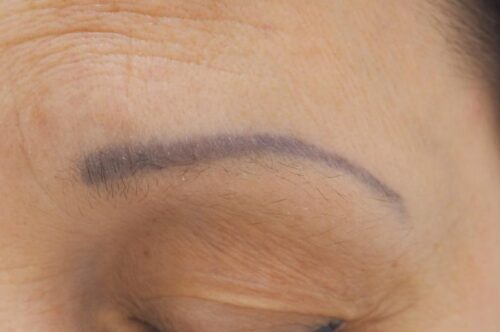
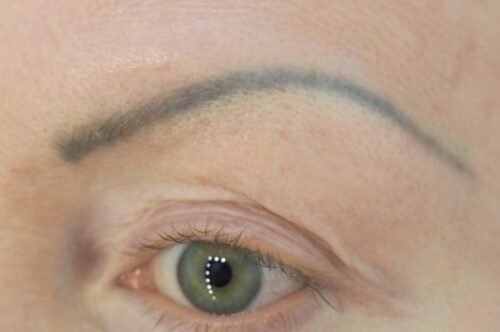
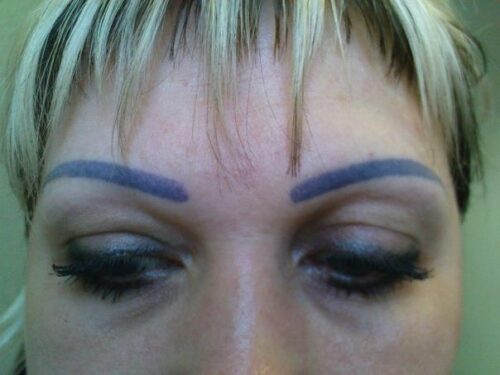
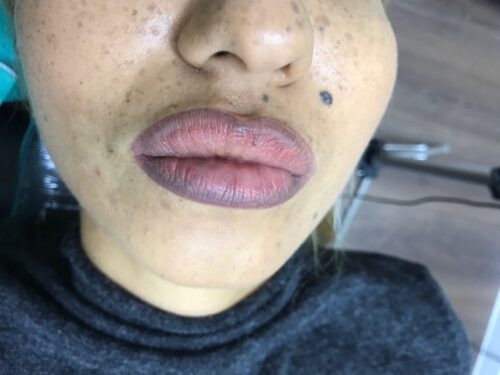
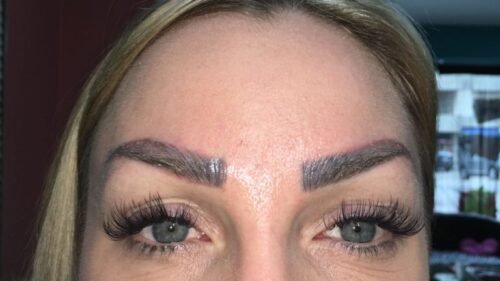
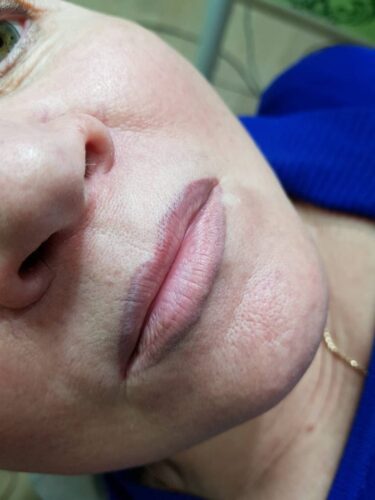
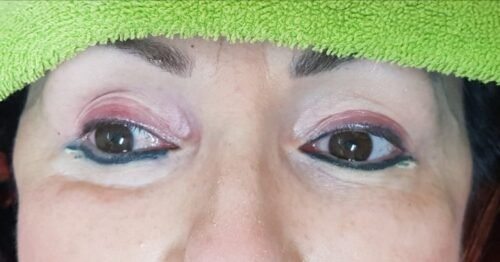
The examples below show cases where a simple touch-up would not be the safest or most effective option. If the old pigment has healed to an unwanted blue, grey, red, purple, or overly saturated tone, or if the skin shows visible trauma or scarring, removal is usually recommended first.
Examples of permanent makeup that may need removal before a correction:


Why healed results matter before any correction
Fresh cosmetic tattoo can look very different from the healed result. When assessing old work, Dasha always looks at how the pigment has healed over time — not just how it looked immediately after treatment. This is especially important when deciding whether a touch-up is possible or whether removal is the safer first step.
How poor-quality pigment can affect correction
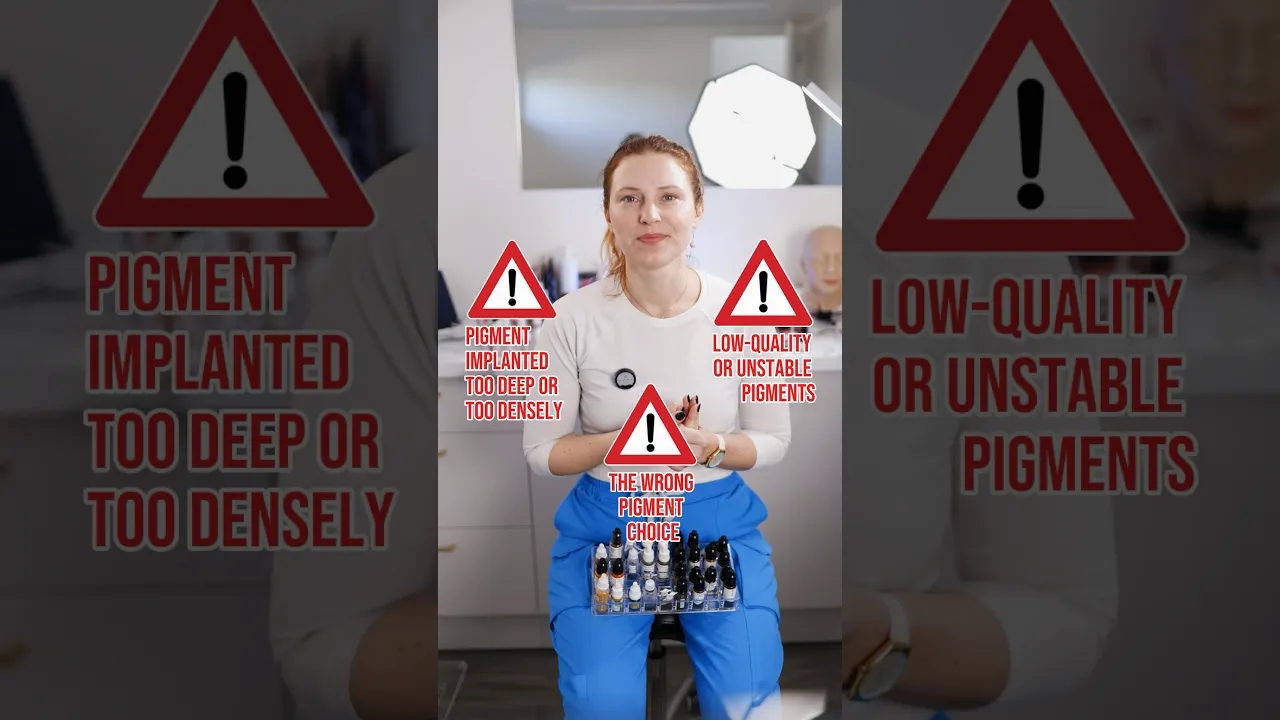
The type of pigment used in the original procedure also matters. Cosmetic tattoo should be performed with pigments specifically designed for cosmetic micropigmentation, not regular body tattoo ink. However, the issue is not only that some technicians use pigments intended for body tattooing. Another common problem is the use of low-quality permanent makeup pigments that are unstable in the skin and may heal into unwanted blue, grey, red, purple, or other unattractive tones over time.
High-quality cosmetic tattoo pigments are expensive, and this is one of the reasons why good permanent makeup is not cheap. Beautiful healed results depend not only on artistic skill and safe technique, but also on the quality, stability, and long-term behaviour of the pigment in the skin. If poor-quality pigment was used in the original treatment, correction can become much more difficult and removal may be the safer first step.
Why can’t every old cosmetic tattoo be touched up?
If you are looking for a touch-up after cosmetic tattoo done by another artist, it usually means something about the original work was unsatisfactory — for example patchy colour, an unwanted shade, poor shape, visible asymmetry, blurred edges, oversaturation, or signs that the skin has been overworked. Before any correction is performed, Dasha will assess whether the old work can be safely improved with colour correction and redesign, or whether removal is the better first step.
In correction work, the goal is not simply to add more pigment. The goal is to create a result that looks softer, more balanced, and more natural once healed. In some cases this is possible with careful corrective work. In other cases, adding more pigment would only make the problem heavier, darker, and more difficult to fix later.
When a touch-up is possible
When can cosmetic tattoo done by another artist be touched up? A touch-up may be possible when the old pigment is soft enough, the shape is still workable, there is enough free space for a better design, and the skin is in good condition. In these cases, Dasha may be able to improve colour, softness, symmetry, and overall balance without full removal first.
This may apply to brows, eyeliner, lips, scalp micropigmentation, and other forms of permanent makeup, depending on how the previous work has healed and how much space is available for a better design.
When is removal recommended before a correction?
Removal is usually recommended first when the old cosmetic tattoo has healed to an unwanted blue, grey, red, purple, or green tone, when the shape or placement still dominates the area, when the pigment is too saturated, or when the skin shows visible trauma or scar tissue. In these situations, trying to simply add more pigment can make the result look heavier, darker, and less natural.
If the skin has been damaged by previous cosmetic tattooing or microblading, removal may not be the only step required. In some cases, the skin may also need to be treated and restored before a new cosmetic tattoo can be considered. Inkless Scar Revision (ISR) may be recommended when there is visible scar tissue, fibrosis, uneven skin texture, or overworked skin caused by previous eyebrow tattooing, lip tattooing, eyeliner tattooing, or microblading.
Inkless Scar Revision (ISR) focuses on improving the appearance and quality of the skin itself, while removal focuses on reducing unwanted pigment. When the skin is healthier and the old pigment has been sufficiently lightened, it is often possible to create a softer, cleaner, and more natural-looking cosmetic tattoo result.
If you would like to understand these options in more detail, you can read more about eyebrow laser tattoo removal, how many treatments may be needed for laser tattoo removal, my advice on how to deal with badly performed semi-permanent makeup, and Inkless Scar Revision for cosmetic tattoo and microblading scars.
If the colour of your cosmetic tattoo is wrong
If the old pigment has faded unevenly, healed too cool, too bright, or shifted into an unwanted pink, purple, grey, blue, green, or muddy tone, an additional correction step may be needed. In some cases, colour correction can improve the result. In other cases, removal is the safer and cleaner first step before new pigment is added.
This applies not only to eyebrow tattoo, but also to eyeliner, lips, and other permanent makeup procedures where the healed colour no longer looks natural.
If your current cosmetic tattoo looks similar to the examples below, Dasha may be able to help by removing or lightening the old pigment first, and then creating a much softer and more flattering healed result once the skin is ready.

If the shape or placement of your cosmetic tattoo is wrong
If the old shape is not flattering, too heavy, uneven, too long, too high, asymmetrical, or simply does not suit your facial features, a touch-up is not always the best solution. Before adding new pigment, Dasha will assess whether there is enough space to create a better design, or whether removal is needed first to avoid making the result heavier or more artificial.
When possible, Dasha will draw several new design options during the consultation so you can see what may be achievable. This approach can be used for brows, lips, eyeliner, and other cosmetic tattoo corrections where the existing design needs to be softened, reshaped, or improved.
The goal is not just to cover the old work, but to create a result that looks intentional, balanced, and beautiful once healed.
How many laser sessions are needed before a correction?
The number of laser sessions needed before a correction depends on the pigment colour, depth, saturation, how many previous tattoo procedures have been done, and how the skin responds to treatment. In some cases, only partial lightening is needed before a safe correction can be performed. For example, laser treatment may help shift unwanted blue-grey pigment toward a softer brown or warm orange tone, or reduce bright red or orange tones so the area becomes easier to neutralise and correct.
More saturated tattoos, especially those that have been tattooed multiple times and contain several layers of pigment, usually require a longer removal process. In more difficult cases, lightening the area enough for correction can take up to 10 sessions. The interval between treatments is usually around 6 to 10 weeks to allow the skin to heal properly between sessions.
In some cases, colour correction can improve the result. In other cases, removal is the safer and cleaner first step before new pigment is added, especially when the old colour is too saturated or has healed into an unstable tone.
Read more about: How Many Treatments Do I Need For Laser Tattoo Removal?



Many correction cases involve old microblading
Many correction cases involve old microblading that has healed unevenly, blurred over time, changed colour, or left the skin looking too dense or texturally uneven. If you are not sure whether your old brows were created with microblading or machine tattoo, you can read more in About Microblading.
Every correction case is different. Some old permanent makeup can be improved beautifully, while other cases need a more staged approach. The safest and most natural-looking result always begins with a careful assessment of the old pigment, shape, placement, and skin condition.
FAQ
Can cosmetic tattoo done by another artist be touched up?
When should old permanent makeup be removed instead of covered?
Can old microblading be corrected?
Can bad eyeliner or lip blush be corrected?
How many laser sessions are needed before a correction?
Can Dasha remove old permanent makeup before creating a new result?